Secure by design
Choose where your data lives, enforce SSO and role-based access, control publishing with 앱rovals, and keep your code and prompts out of model training.
Enterprise 보안 controls
Access and control
Lovable integrates with SAML and OIDC providers including Okta, Azure AD, and Google. SCIM supports automated provisioning and deprovisioning. Permissions are role-based and enforced server-side across viewing, editing, 앱roving, and publishing.
Guardrails for 빌드ing & publishing
Editing, 앱roval, and publishing are separate permissions. 공개 access is controlled by role and environment 설정, so 팀s can move quickly without risking accidental exposure.
Secrets are handled securely
Secrets are encrypted at rest and access-controlled by role. They are not exposed in plaintext in logs or interfaces. Access is limited to authorized environments and actions.
Data residency
Lovable Cloud supports regional data hosting in the EU, US, and Australia. Customer data remains in the region you select and does not move across regions by default. We're transparent about our infrastructure and subprocessors, so you always know where your data lives and how it's handled.
Your data is not used to train models
We do not use customer prompts, code, or workspace data to train Lovable models. When we work with AI providers, contractual agreements restrict training and retention of customer data. Your work stays your work.
Isolation by design
Each workspace and 프로젝트 is logically separated. Customer data is not accessible across 계정s. Environment boundaries are explicitly defined and evaluated before changes are published, ensuring separation between development and production.
Continuous monitoring & abuse detection
Lovable continuously monitors platform activity for misuse, anomalous behavior, and compromise. Automated systems enforce rate limits and detect abuse across 사용자s and workspaces, with high-risk activity reviewed by our trust and safety 팀.

Automatic 보안 scanning
Generated code, dependencies, and configurations are automatically scanned for vulnerabilities and unsafe 설정. Findings are categorized by severity and surfaced before deployment. Independent 보안 testing and periodic assessments strengthen our controls over time.
Protected infrastructure
Lovable Cloud is protected by web 앱lication firewall (WAF) controls, network isolation, encrypted data storage, and adaptive rate limiting at the IP, 사용자, and workspace level.
Founder 보안
AI penetration testing
Get an audit-ready report for SOC 2, ISO 27001, and investor due diligence, proving your 앱 is secure.
Read more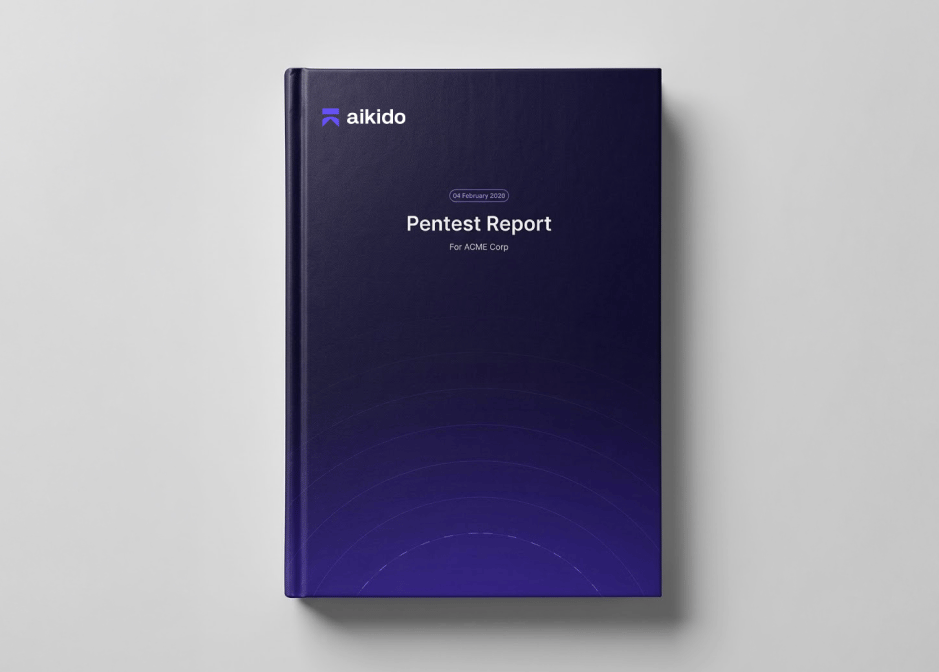
Your guide to 보안 as a Lovable founder
What investors actually look for in a technical due diligence review — and how to pass it.
Find vulnerabilities before they find you
Four automated scanners check your RLS policies, database schema, 앱lication code, and dependencies — continuously as you 빌드, and automatically before you publish.
Compliant and certified
Frequently asked questions
Where is customer data stored?
Customer data is hosted in Lovable Cloud in supported regions including the EU, US, and Australia. Data residency is region-specific and does not move across regions by default.
Is customer data used to train AI?
No. Customer prompts, code, and workspace data are not used to train Lovable models. Where third-party AI providers are used, contractual agreements restrict training and retention of customer data.
Is Lovable multi-tenant, and how is customer data isolated?
Lovable is a multi-tenant platform with logical isolation between workspaces and 프로젝트s. Customer data is not accessible across 계정s. Isolation controls are enforced at both the 앱lication and infrastructure layers.
Which subprocessors does Lovable use?
Lovable works with a limited set of infrastructure and AI subprocessors. All subprocessors are covered under contractual data protection agreements. A current list of subprocessors is available upon request.
Does Lovable access or clone our source code?
No. Lovable does not clone customer Git repositories, access 앱lication code inside your environments, or require internal CI/CD access. Your source code, repositories, and production infrastructure remain inside your organization's existing 보안 perimeter. Lovable does not deploy agents inside customer production environments or introduce inbound network connections.
Does Lovable require access to our CI/CD pipelines or production infrastructure?
No. Lovable does not require direct access to customer CI/CD pipelines or production infrastructure. It does not deploy agents inside production environments or introduce inbound network connections. All integrations operate within defined permission boundaries.
How are publishing controls enforced?
Publishing permissions are enforced server-side and cannot be bypassed via client-side requests. Editing, 앱roval, and publishing are separate role-based permissions. Production publishing can require explicit 앱roval, and all publishing events are logged with 사용자 attribution.
How does Lovable enforce role-based access control (RBAC)?
Lovable integrates with SAML and OIDC identity providers and supports SCIM for automated provisioning and deprovisioning. Access is role-based, with permissions explicitly defined for viewing, editing, 앱roving, and publishing. All authorization checks are evaluated server-side at request time.
Does Lovable support least-privilege access?
Yes. Lovable supports least-privilege access through role-based permissions and integration with enterprise identity providers. Organizations can define granular roles for editing, 앱roving, and publishing, ensuring 사용자s receive only the access required for their responsibilities. Access policies align with organizational identity and workspace configuration 설정.
How are secrets and API credentials managed?
Secrets are encrypted at rest and scoped to specific environments. Access to secrets is role-controlled and auditable. Secrets can be rotated or revoked without requiring full system redeployment. Integrations execute within predefined permission boundaries to reduce unintended credential exposure.
Does Lovable perform automated 보안 scanning?
Yes. Lovable automatically scans generated code, dependency trees, and database configurations for known vulnerabilities and unsafe configurations. Findings are categorized by severity and surfaced before deployment at the workspace level. 보안 scanning is part of the default development workflow.
Is Lovable SOC 2 or GDPR compliant?
Lovable supports SOC 2 and GDPR requirements and provides 보안 documentation and data protection agreements for enterprise review.