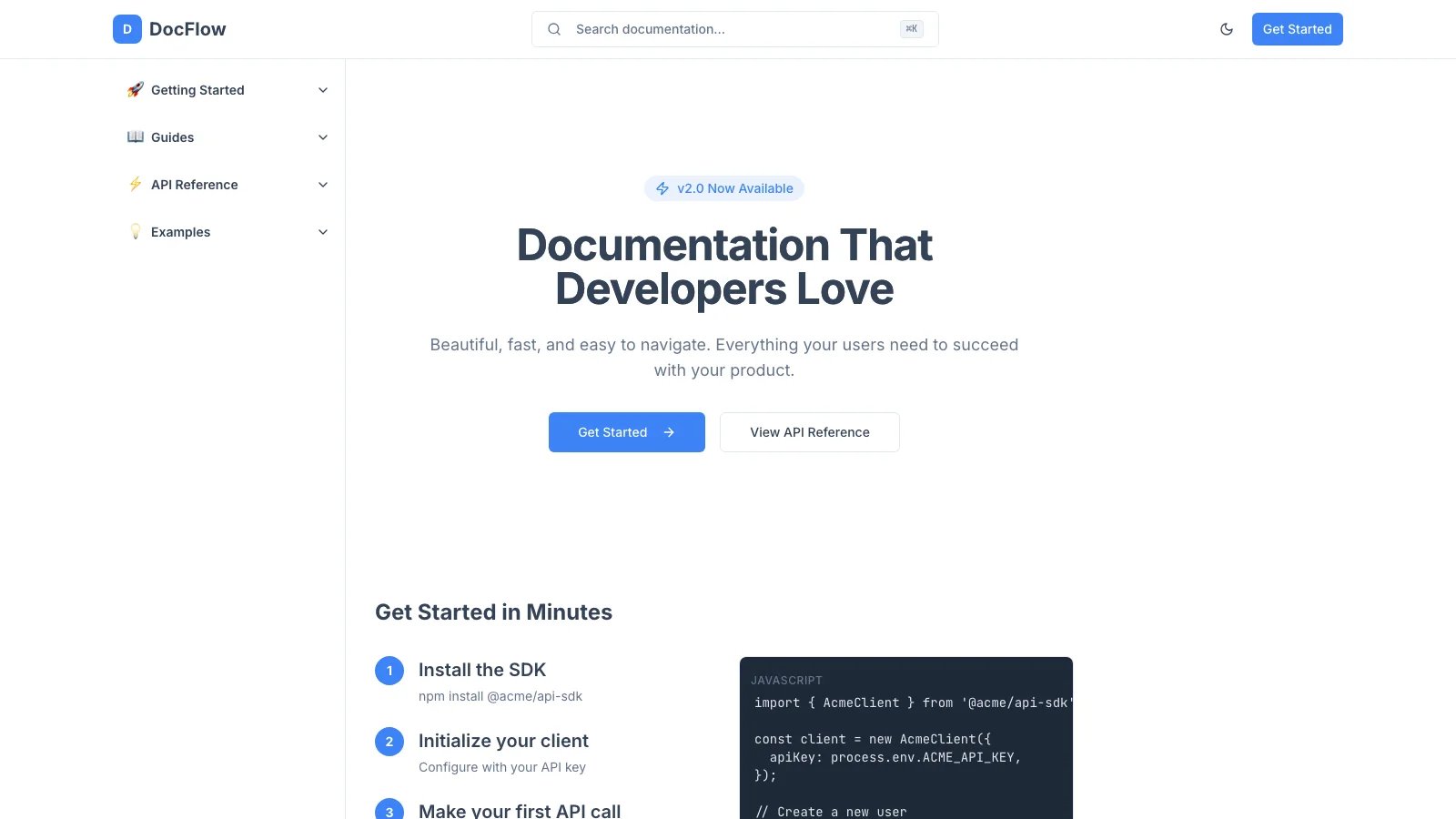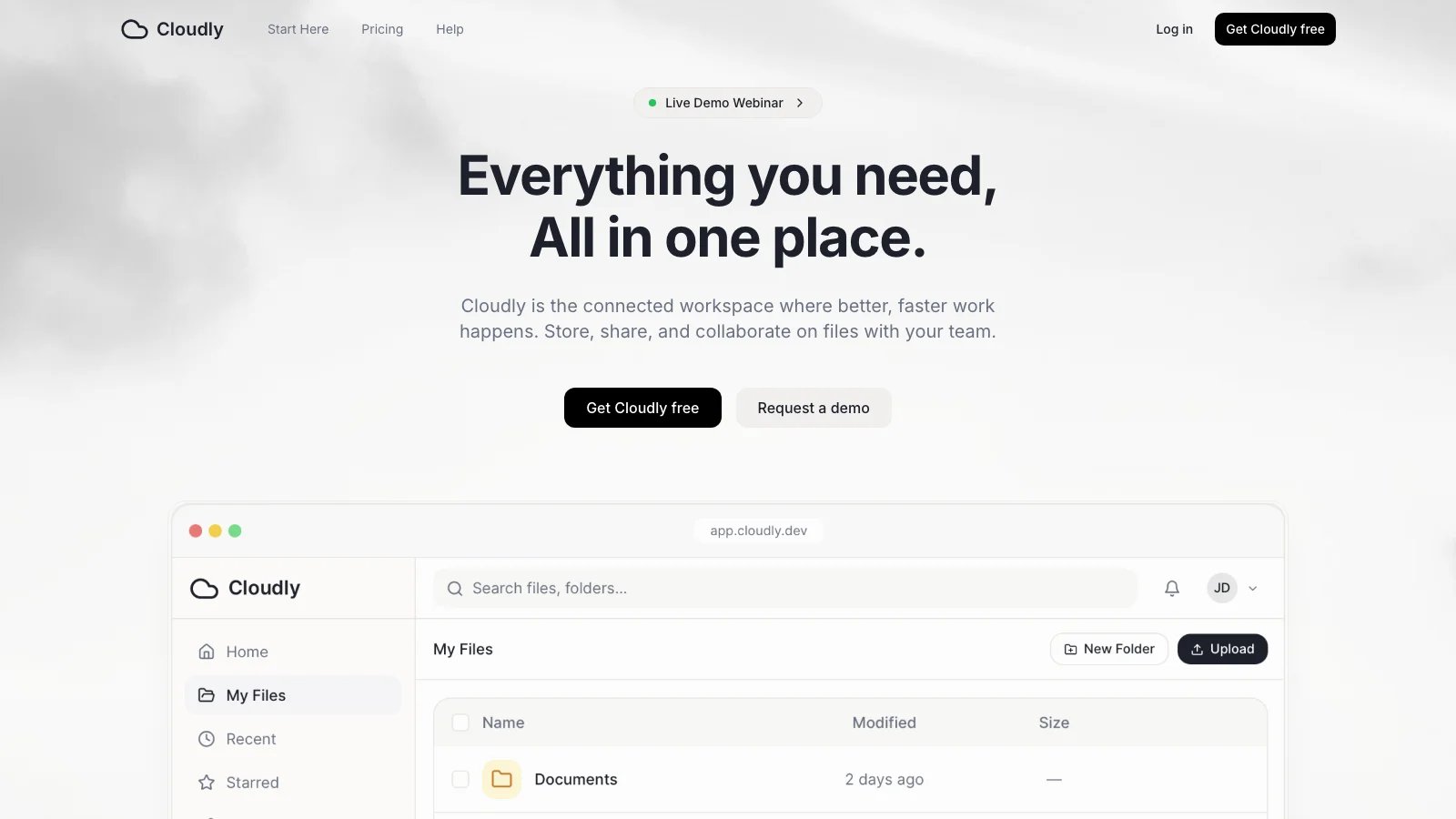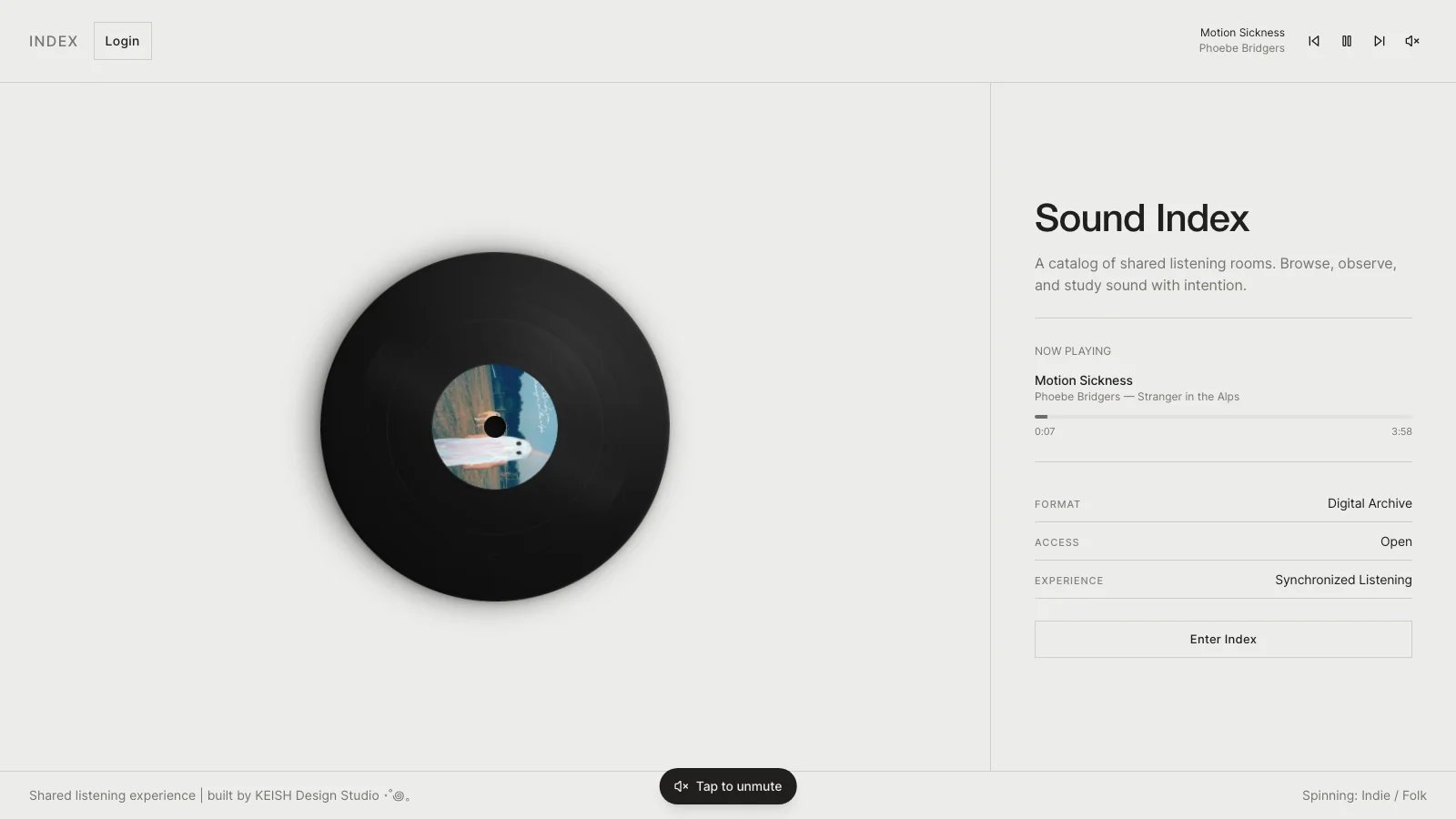
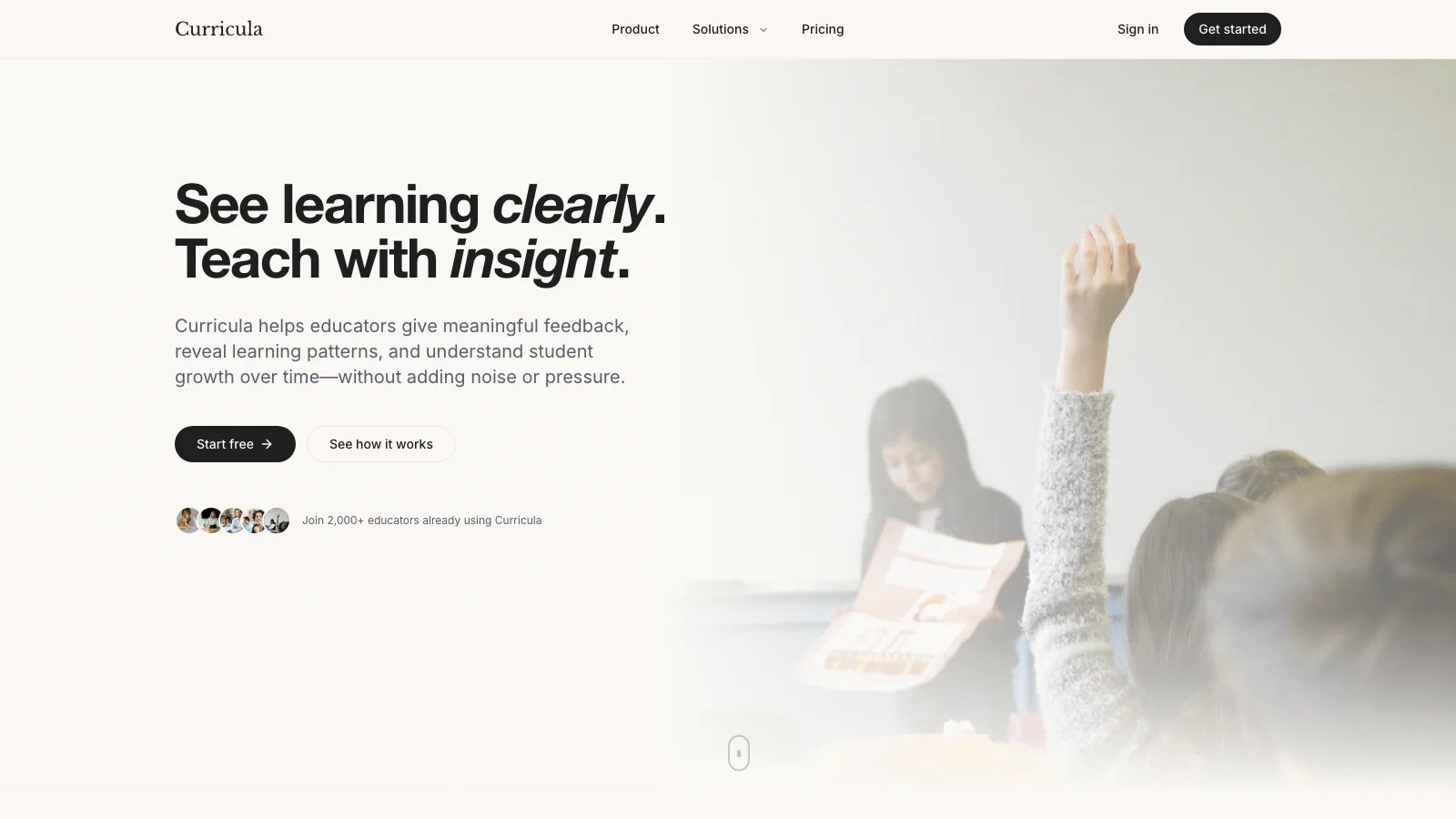
Curricula — Calm Grading & Feedback for Educators Template
Calm grading workspace for educators
KEKEISH Studio
·
Key Highlights
Calm, Editorial Grading Workspace
A thoughtful interface that stays out of your way so you can focus on students, not software.
Complete Educator & Student Portals
Both sides ready to go: dashboards, submissions, feedback views, and class management included.
Split-Pane Annotation Grading
Review submissions with multi-color highlights and inline corrections in a resizable workspace.
Team Calibration Built In
Run calibration sessions and share rubrics to keep grading consistent across your department.
Professional Without a Developer
Launch a polished grading platform in hours, not months, without hiring technical help.
Features & Capabilities
Production-ready features built with modern tech stack for exceptional performance and user experience
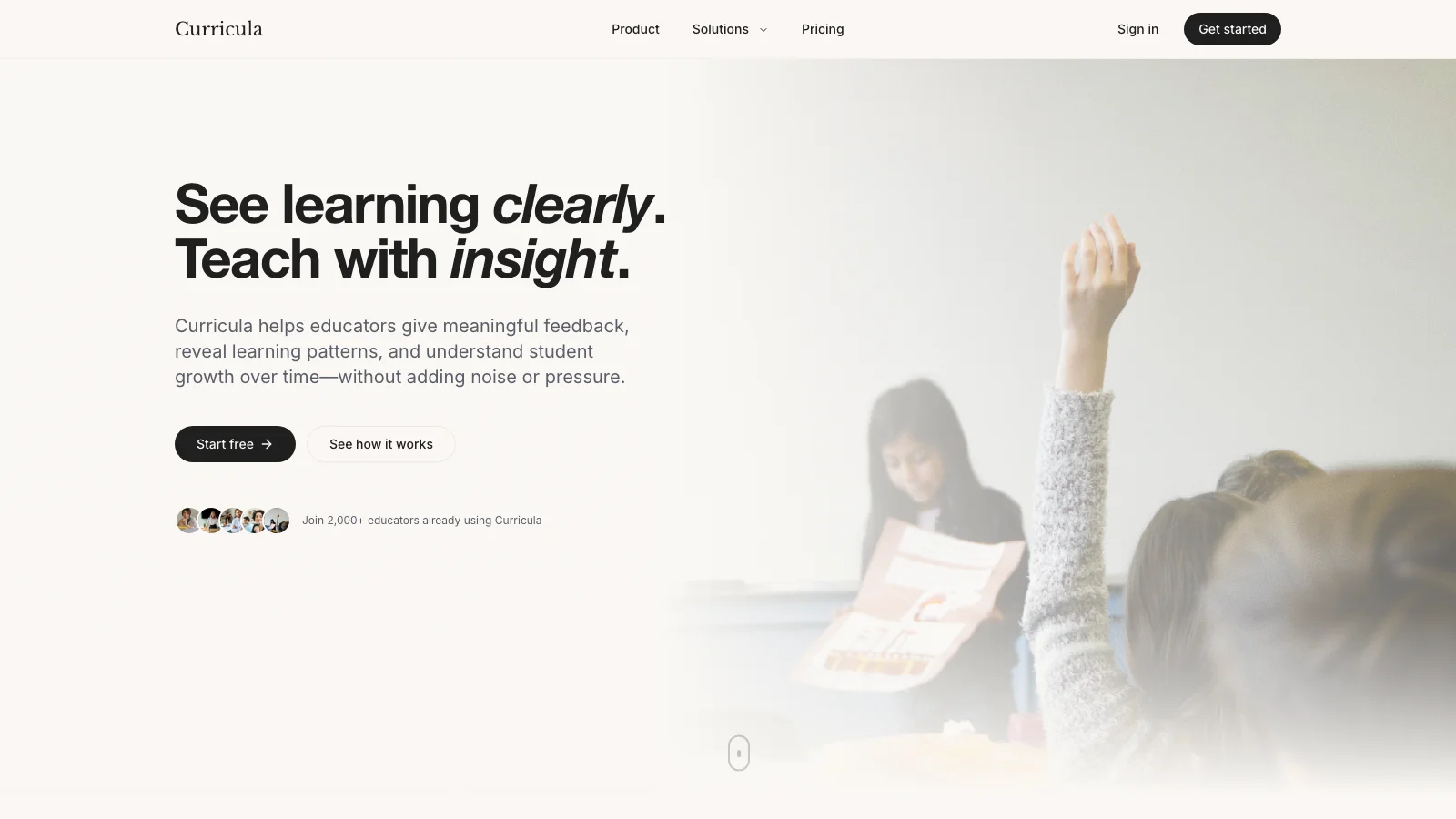
Loading live preview...
About this template
This template gives you a full grading and feedback web app that looks professional, and you don't need coding skills to make it work. Educators get a calm, editorial workspace where every interaction, from building rubrics to annotating student submissions, feels intentional.
The technical parts are already handled. Mobile responsiveness, a split-view grading workspace, drag-and-drop assessment building, rich text editing, file uploads, and data visualization for student insights: all done. You can focus on giving thoughtful feedback instead of fighting with software.
Both educator and student interfaces come ready to go. Educators get a dashboard, class management with Notion-style banners, a spreadsheet-style gradebook with color coding and saved views, assignment creation wizards, a submission grading workspace with annotation tools, rubric editing with version history, lesson plan editing, assessment building with AI question generation, analytics pages for class patterns and student growth, team collaboration with calibration sessions, import/export tools, and a full settings panel. Students get their own dashboard, class views, assignment submission with drag-and-drop upload, and a feedback detail view. A marketing site with four pages (Home, Product, Pricing, Educators landing) rounds out the package.
Instead of paying monthly for a grading platform that forces your workflow into someone else's structure, you get full control over how you grade, annotate, and communicate with students. No subscription lock-in, no feature gates based on your plan tier.
| This Template | Typical Paid Tools | |
|---|---|---|
| Cost | Free to start | $20–100/month |
| Setup time | Hours | Days to weeks |
| Customization | Full control | Limited to plan tier |
| Lock-in | None, export anytime | Subscription required |
Who This Is For
- Educators spending evenings on clunky grading software instead of lesson prep. This gives you a calm workspace that stays out of your way.
- Tutoring business owners whose generic tools make them look amateur. The editorial design builds credibility with parents and students.
- Department heads who need class-wide analytics but can't get IT to build anything. Set up insights pages in hours, not semesters.
- Curriculum coordinators juggling rubrics across multiple teachers. Shared rubrics, calibration sessions, and team insights live in one place.
- Independent instructors who want a professional student-facing portal without hiring a developer. Students get their own login, submission uploads, and feedback views.
- Ed-tech coordinators tired of paying per-seat for tools the team barely uses. Customize this to fit your actual workflow.
Best Use Cases
Classroom Grading and Feedback
Set up a complete grading workspace with split-pane submission review, multi-color text annotations, and inline corrections. The annotation toolbar lets you highlight, comment, and correct directly on student work. Faster, more specific feedback means students actually understand what to improve, and you reclaim hours each week.
Assessment and Rubric Management
Build assessments with a Typeform-style wizard that supports AI question generation, then link them to rubrics you can version, clone, and share across your team. Rubric usage tracking shows which criteria work and which need revision. Standardized rubrics reduce grading inconsistency, which matters when parents or administrators ask how grades are determined.
Student Progress Analytics
Track assignment completion, class-wide patterns, individual student growth, and feedback usage through dedicated insights pages with area and bar charts. The data helps you identify struggling students early, before a single low grade becomes a pattern. Educators who catch trends early spend less time on interventions later.
Team Calibration and Collaboration
Run calibration sessions where multiple educators grade the same submissions and compare results. Shared rubrics, team insights, and co-educator roles keep grading consistent across sections. Consistency across a department protects against grade disputes and builds trust with students and families.
See yourself in one of these? Remix this template and start building.
What You Can Build
This template gives you the foundation for:
- A grading hub where you review submissions in a split pane, annotate student text with color-coded highlights, and track progress across an entire semester in one gradebook
- A student portal where learners submit work through drag-and-drop upload, view detailed feedback with inline corrections, and check their standing across classes
- A team workspace where educators share rubrics, run calibration sessions, and view department-wide analytics to keep grading fair and consistent
Getting Started
Step 1: Remix This Template
Click "Remix" to create your copy. You'll have a complete grading and feedback app ready to customize, with educator pages (dashboard, classes, courses, students, gradebook, assignments, rubrics, lesson plans, assessments, insights, team tools, imports/exports, settings), student pages (dashboard, classes, assignments, feedback), and a four-page marketing site. All the pages and features are already working. You just need to make it yours.
If this template isn't the right fit, you can remix a different one. No wasted work.
Step 2: Customize Your Brand
Change the warm parchment background and pastel accent colors to match your school or brand identity. Update fonts (the template ships with Inter for UI, Libre Baskerville for student-facing prose, and Helvetica Neue for display headings). The visual editor lets you modify layouts and see changes instantly as you work. You don't need to know code to make it look exactly how you want. Dark mode is already built in and adjusts automatically.
Step 3: Add Your Content
Replace the sample classes, assignments, rubrics, and lesson plans with your own curriculum. Upload your materials and write assignment briefs using the built-in rich text editor. Add your rubric criteria and drag them into the order that matches your grading priorities. The template stays out of your way so your content is what students and colleagues notice.
Step 4: Connect Your Tools
Link Google Classroom for roster sync, configure Canvas LMS integration, or set up Resend for transactional emails like submission confirmations. The app includes built-in authentication (email/password, magic link, or Google OAuth) and private file storage for student submissions. Integrations are built for the tools educators actually use.
Step 5: Go Live
Deploy your grading app with one click. Hosting, security, and performance optimization are handled automatically. Your app goes live worldwide in minutes, and you can start sharing the URL with your students and teaching team.
Conclusion
This grading and feedback template works for educators who want their classroom tools to feel as thoughtful as their teaching. You get a professional grading workspace without hiring a developer, student-facing portals without stitching together separate tools, and team calibration features without paying enterprise software prices.
Whether you're an independent tutor setting up your first digital workspace or a department head upgrading from spreadsheets and email, this template gives you a solid foundation. The split-pane grading view handles annotation smoothly, the gradebook supports saved views and color-coded performance tracking, and mobile navigation works well for checking submissions between classes. The template is free and takes a few hours to customize. You could have your grading workspace live before your next class.
Related Templates